
Payment plans available
Ready to explore All-On-4 Plus ? We offer a range of payment plans to help make treatment more manageable.
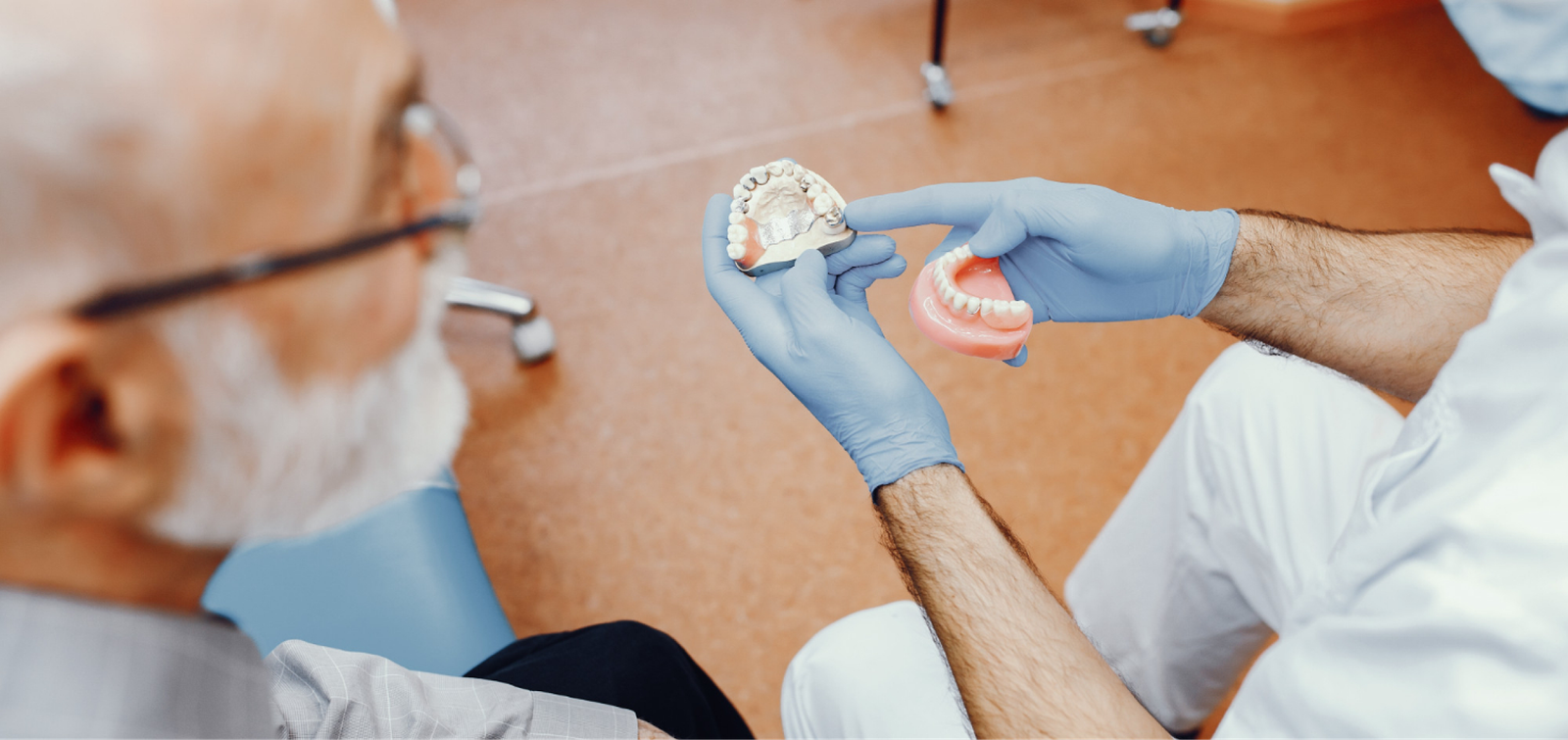
Replacing a whole arch of teeth, with fixed and removable options to consider.
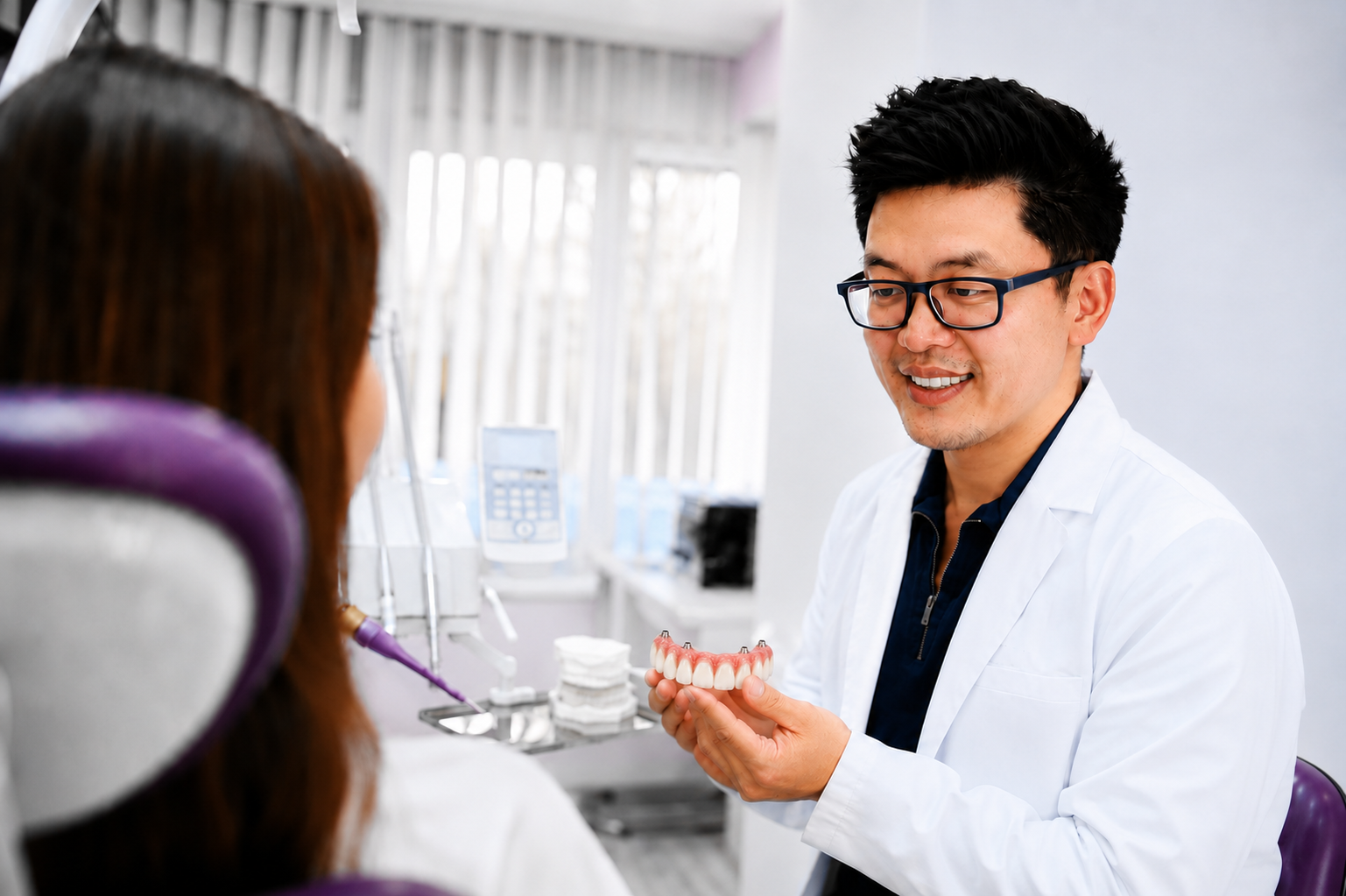
Full-arch implant treatment may suit people who have lost all the teeth in one or both jaws, have multiple failing teeth, or are struggling with loose or uncomfortable dentures. The right option depends on factors such as jawbone health, gums, bite, medical history and personal preferences. During your assessment, we consider these factors along with any health conditions or habits that may affect healing to recommend the most suitable solution for you.
Most full-arch treatment falls into one of three approaches. All three rest on the same foundation, implants placed in the jaw. Where they differ is in how the teeth attach and what living with them is like.
01
Full-arch implant denture (removable)
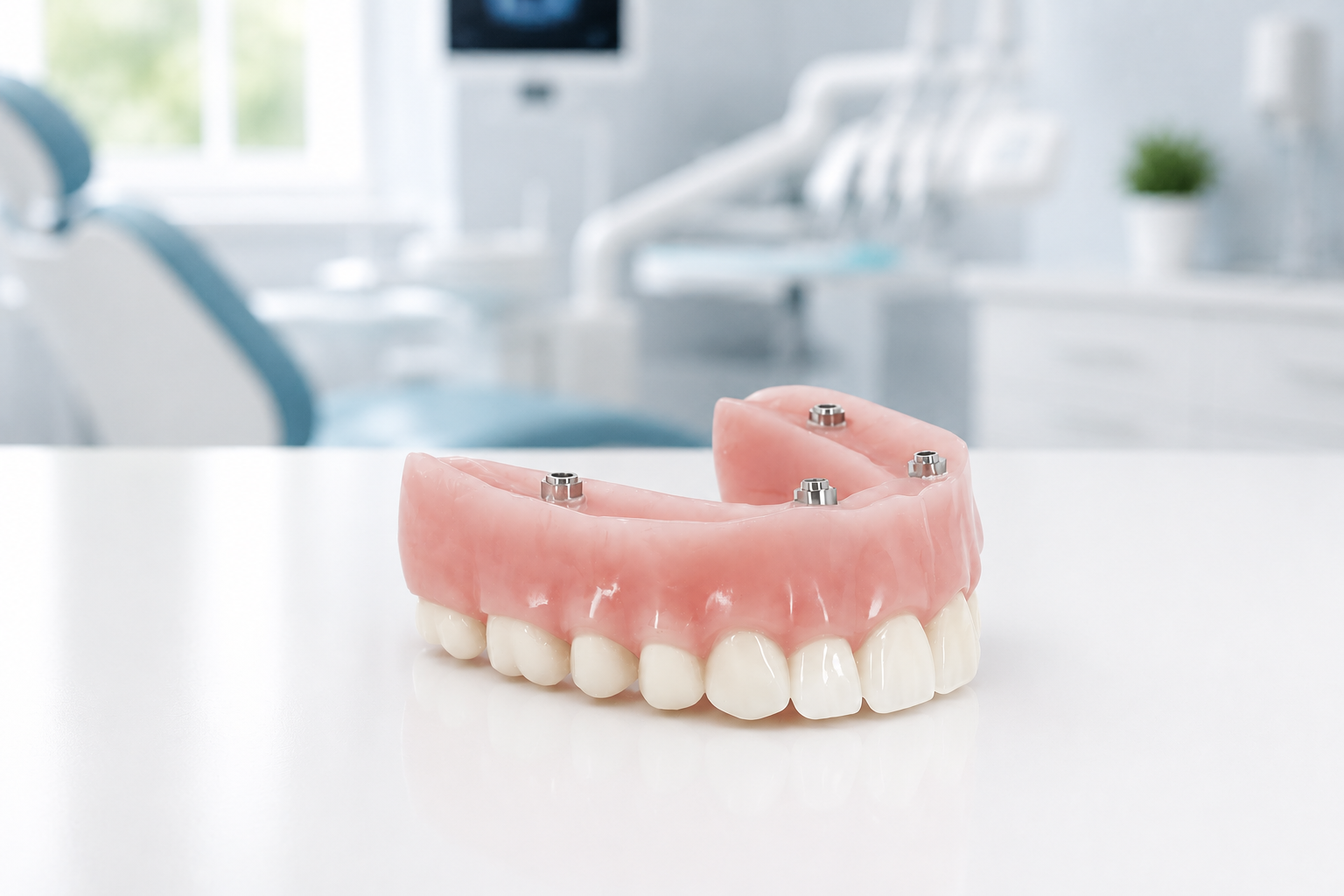
Sometimes called a snap-on denture or overdenture, this attaches to a small number of implants instead of resting on the gums. It offers greater stability than a conventional denture while remaining removable for cleaning. Because it often uses fewer implants, it can be a more accessible option for some patients seeking improved comfort and function.
02
Full-arch implant bridge (fixed)
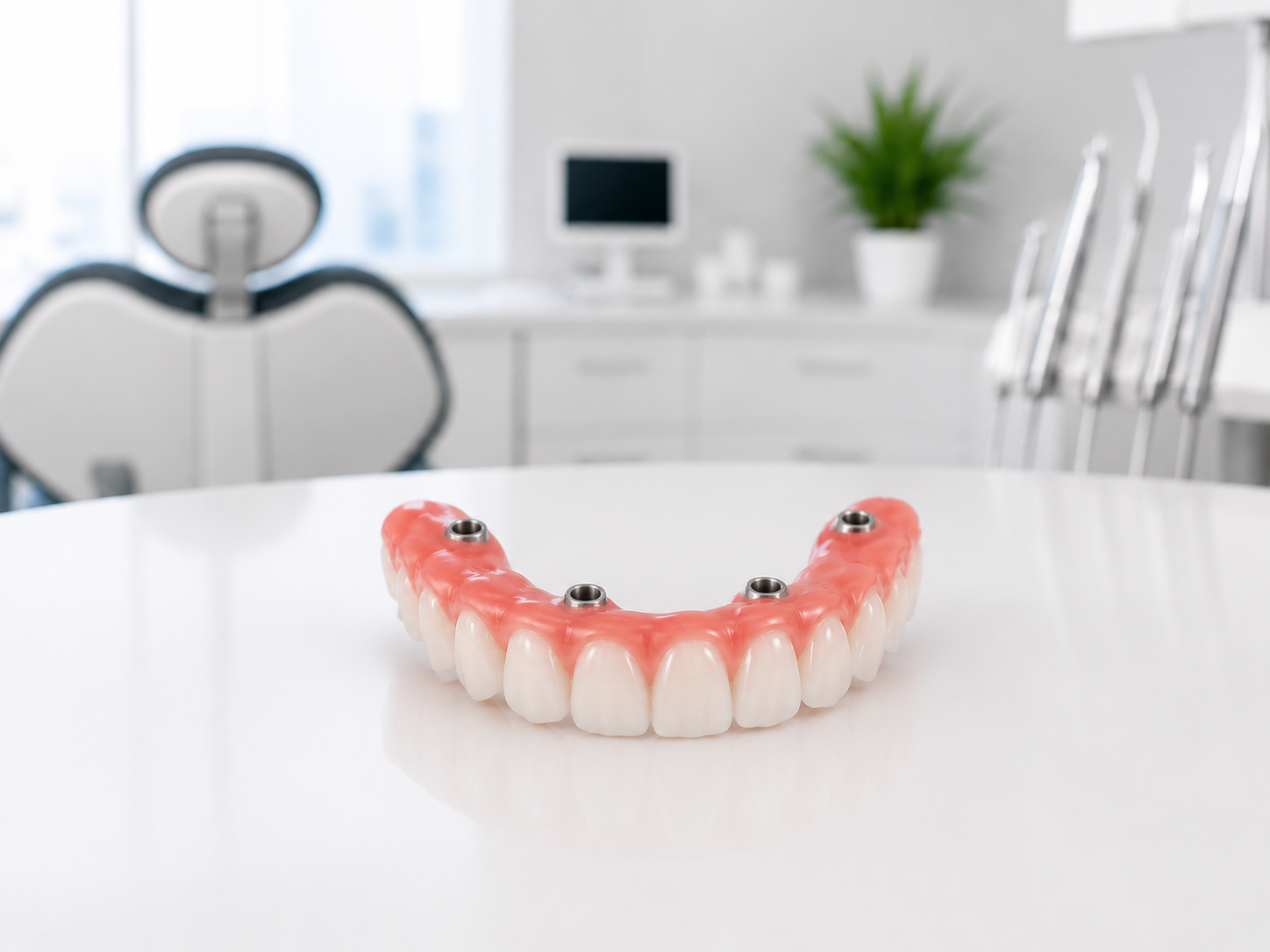
A fixed bridge is secured to implants and stays in place, with removal only by your dental team for maintenance and reviews. Because it does not cover the palate or rest on the gums, many people find it more comfortable for eating and speaking. It typically requires more implants, which increases the overall cost.
03
All-on-4
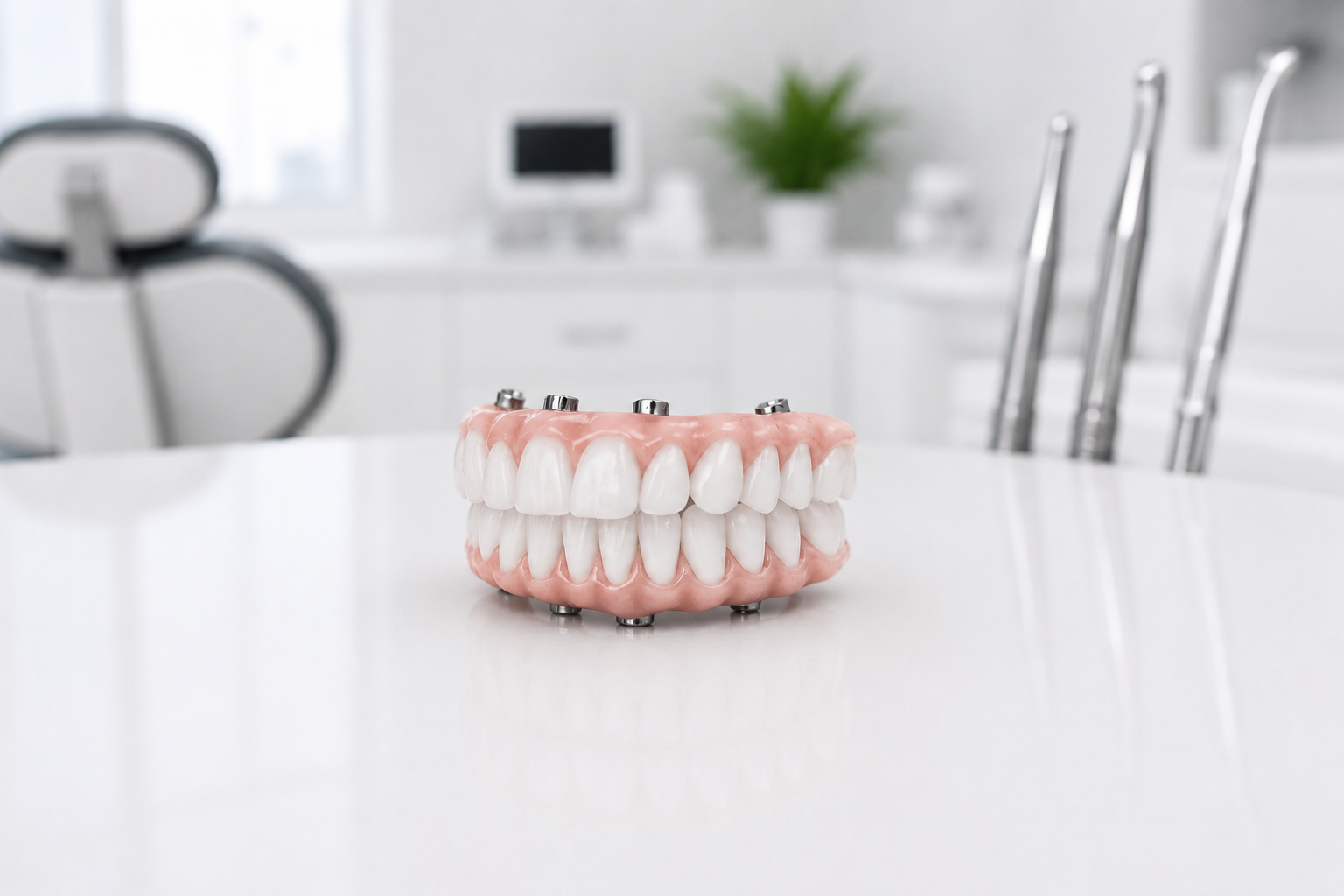
All-on-4® is a fixed full-arch implant solution that uses four strategically placed implants to make the most of the available bone. For suitable patients, fixed teeth can often be fitted on the same day as implant placement. It is one approach to achieving a fixed result, with its own benefits and considerations.
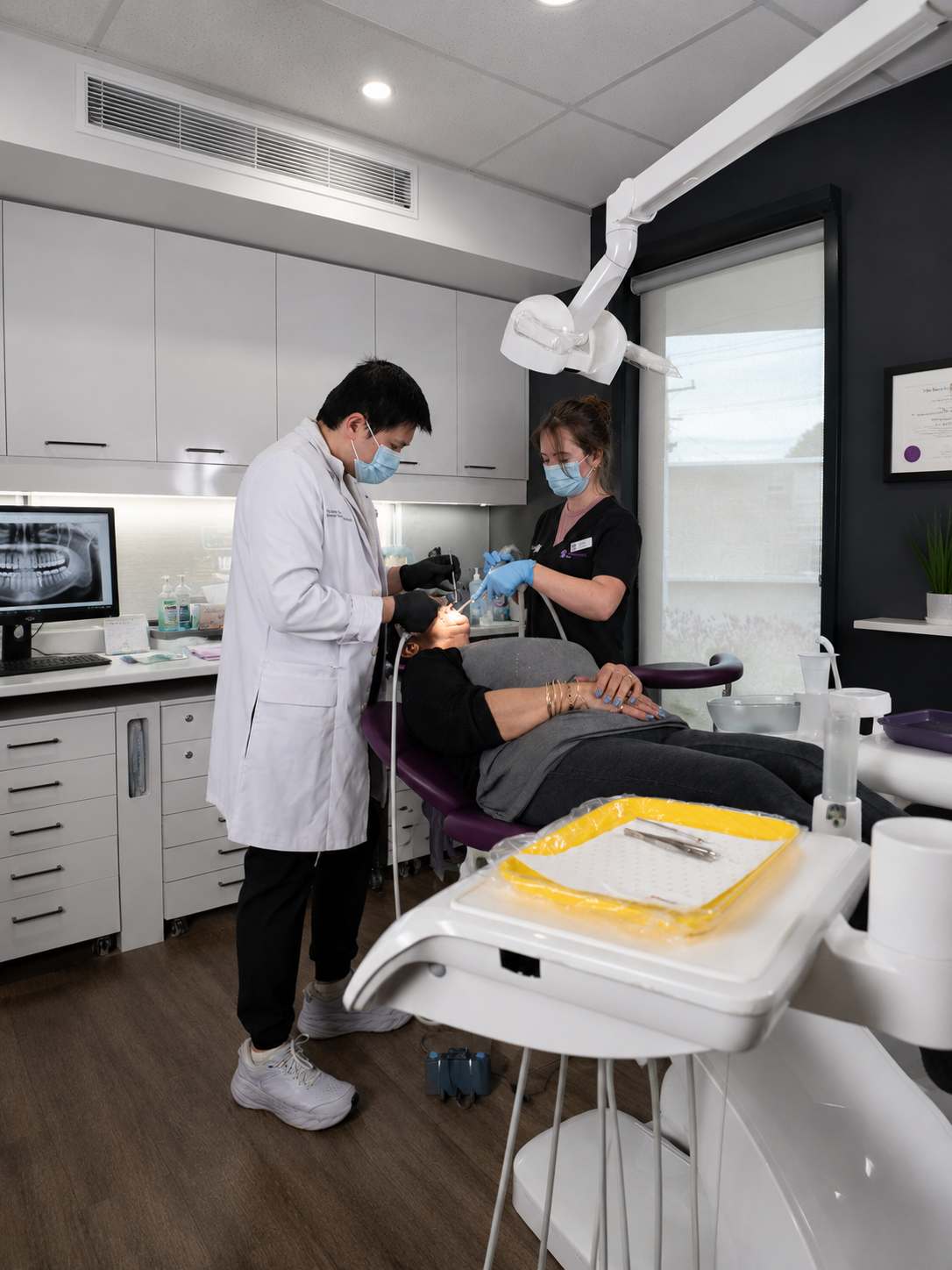
We start with a clinical examination, a review of your dental and medical history, and 3D scans of your jaw so we can see the bone and the structures around it. From there we plan where the implants will sit and how your new teeth will look and work, and we give you a written plan with a cost estimate and a timeframe.
The implants are placed into the jawbone, usually under local anaesthetic, with sedation options discussed beforehand. A healing period then lets them bond with the bone, a process called osseointegration. With a fixed option such as All-on-4 Plus, a fixed temporary set of teeth may go on the same day for suitable patients. With the other approaches, we make sure you are not left without teeth while you heal.
Once the implants have settled, usually after a few months, we fit your final denture or bridge, made to suit your bite and your appearance. Full-arch restorations need ongoing care and regular professional reviews to keep the implants and gums healthy, and we show you exactly how to look after yours.
For a closer look at the same-day fixed approach, see our All-on-4 Plus page.
Choosing between fixed and removable full-arch implants depends on your needs and preferences. A fixed bridge stays in place and feels closest to natural teeth but usually requires more implants and a higher investment. A removable implant denture clips onto fewer implants, can be easier to clean and may cost less initially. Your bone support, cleaning routine, lifestyle and budget all help determine the right option for you personally.
For suitable patients, implant-supported full arch treatment may offer advantages compared with a conventional denture. The benefits can vary depending on your oral health, treatment plan, and individual circumstances.
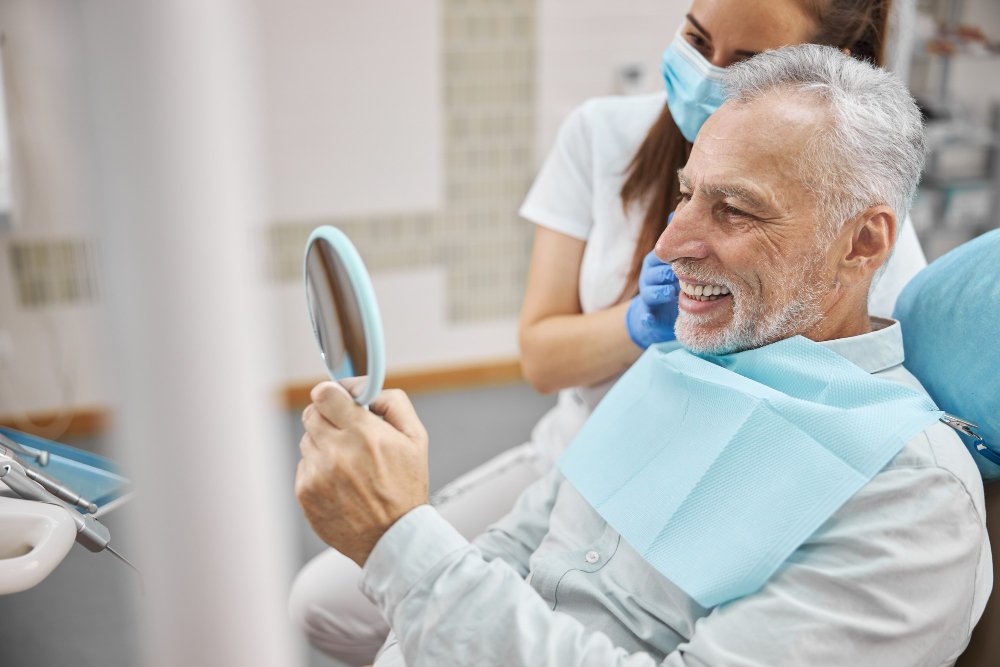
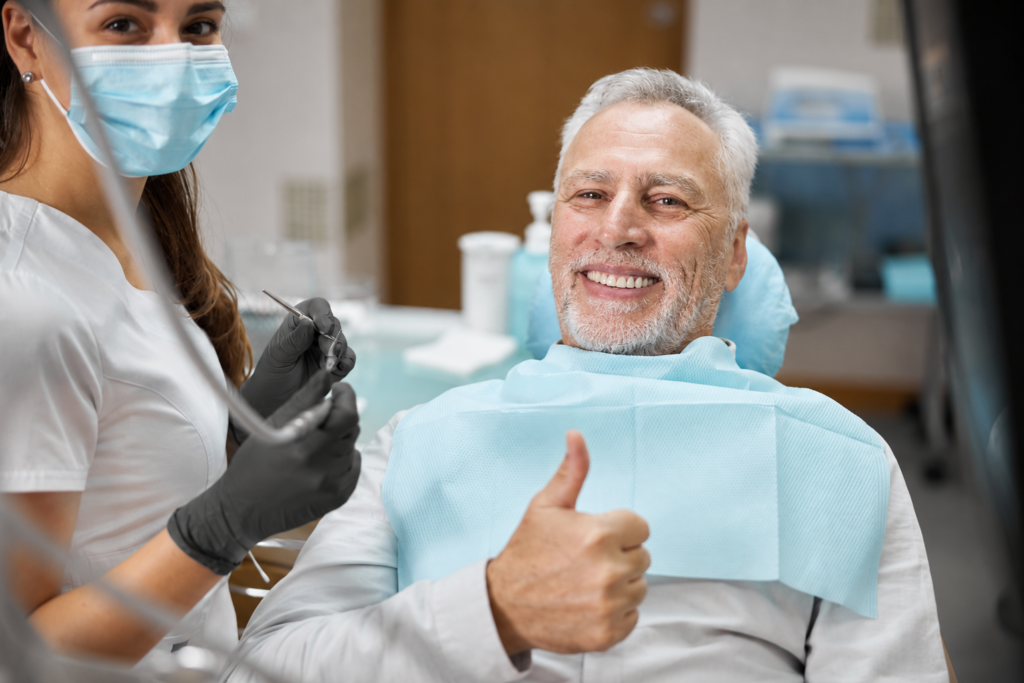


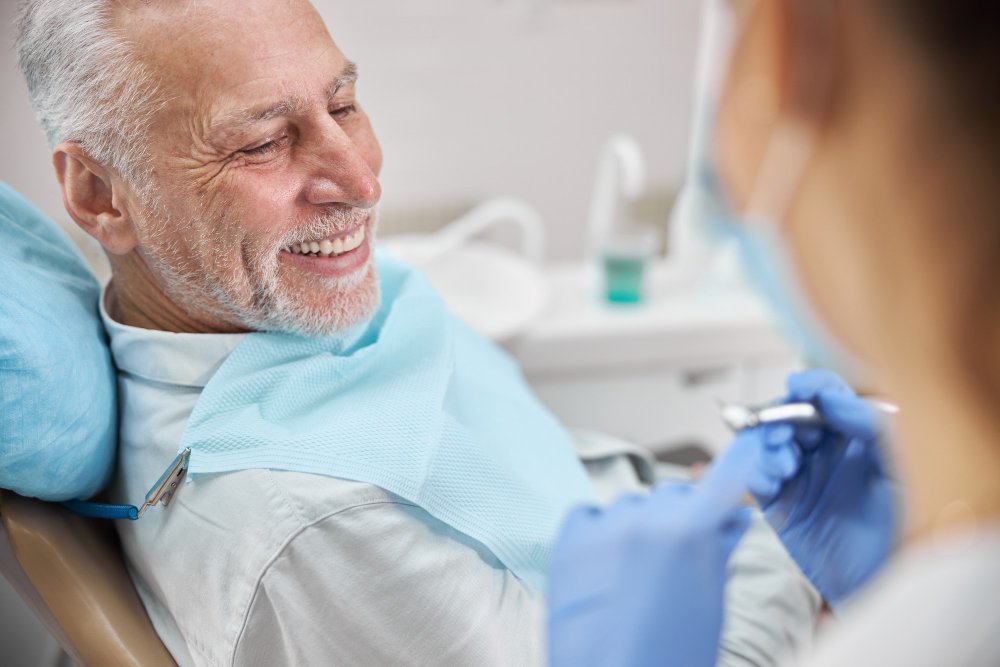
Before-and-after images help illustrate typical treatment outcomes. Images shown are representative examples only. Individual results vary depending on oral health, treatment planning, and healing response. Images published with informed patient consent.
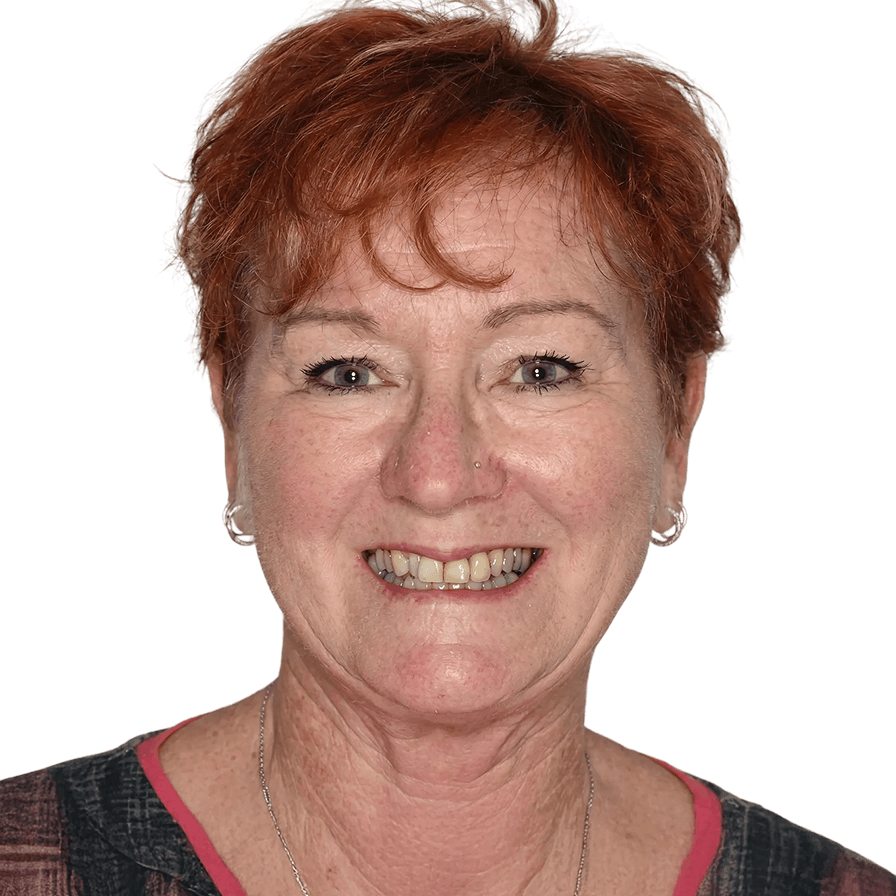

Treatment: All-On-4 Plus® implants
After photo taken approximately 3 weeks after procedure.
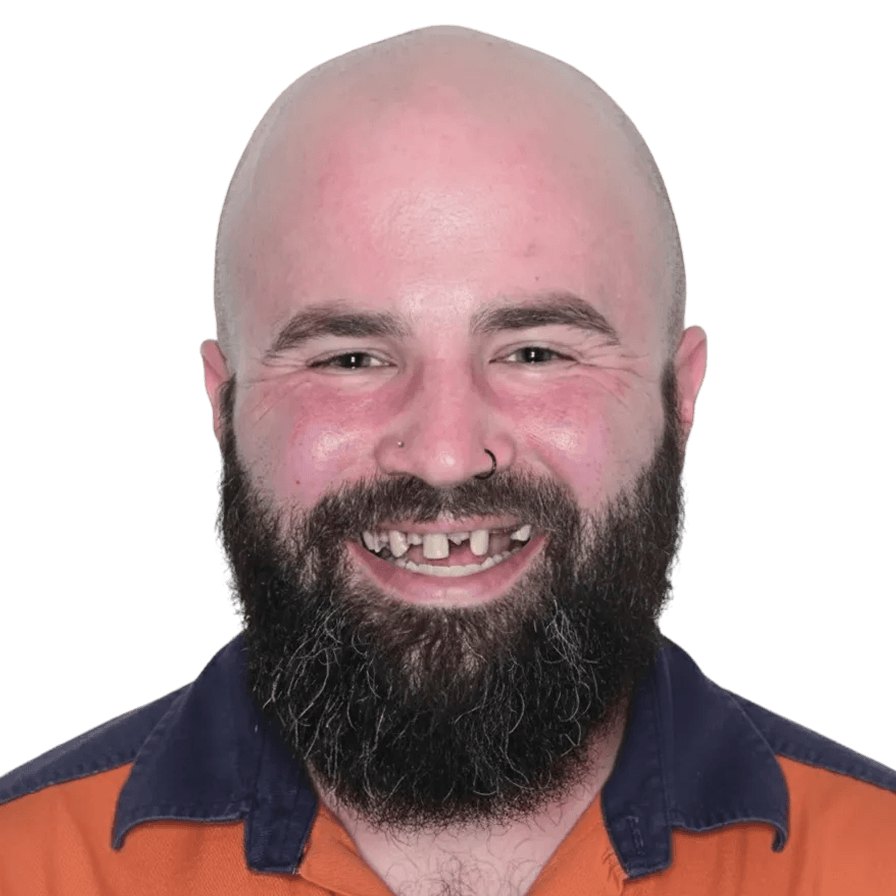

Treatment: All-On-4 Plus® implants
After photo taken approximately 3 weeks after procedure.


Treatment: All-On-4 Plus® implants
After photo taken approximately 3 weeks after procedure.


Ready to explore All-On-4 Plus ? We offer a range of payment plans to help make treatment more manageable.
Common questions about All-On-4 Plus® treatment, suitability, and aftercare.
A fixed bridge is screwed onto the implants and stays in place, taken off only by your dental team for maintenance. A removable implant denture clips onto the implants and lifts out for daily cleaning. Fixed options tend to feel closer to natural teeth and usually need more implants, while removable ones often use fewer implants and can be easier on the budget to begin with. We help you weigh up which suits you.
It depends on the option and on your bone. A removable implant denture often uses fewer implants, while fixed bridges generally use more. All-on-4 Plus uses four implants positioned to make the most of your bone. We confirm the right number for you through your assessment.
All-on-4 Plus is one path to a fixed full-arch bridge, using four Straumann implants with the option of fixed teeth on the day of surgery for suitable patients. The removable denture and the wider fixed bridge options differ in how the teeth attach, the number of implants and how you care for them. There is more detail on our All-on-4 Plus page.
For suitable patients having a fixed option such as All-on-4 Plus, a fixed temporary set of teeth can sometimes go on the same day the implants are placed, where the implants are stable enough. This is assessed on the day. With the other approaches, we make sure you are not left without teeth while you heal.
Surgery is usually carried out under local anaesthetic, and sedation options are discussed beforehand. As with any surgical treatment, experiences differ, and some swelling, tenderness or discomfort is normal while you heal. We explain what to expect and give you guidance on recovery and aftercare.
Like any surgical or dental procedure, full-arch implant treatment carries possible risks and complications. These can include infection, slower healing, an implant failing to bond, and gum or bone-related problems, along with maintenance needs over time. Smoking, diabetes and grinding can raise these risks. We talk through the benefits, the risks and the alternatives relevant to you before you go ahead.
Both fixed and removable options need ongoing care. A fixed bridge is cleaned around and underneath, while a removable denture comes out to be cleaned. Both rely on regular professional reviews to keep the implants and gums healthy. We give you instructions tailored to whichever option you have.
Some private health policies with dental cover may pay towards part of the cost. Because benefits differ between insurers and levels of cover, we suggest contacting your health fund directly to confirm what your policy allows.
If you’re considering dental implants or oral surgery and feel anxious about the process, we’re here to help. You can begin with a consultation to discuss your goals, oral health, and whether sedation dentistry may be suitable for you.
"*" indicates required fields