
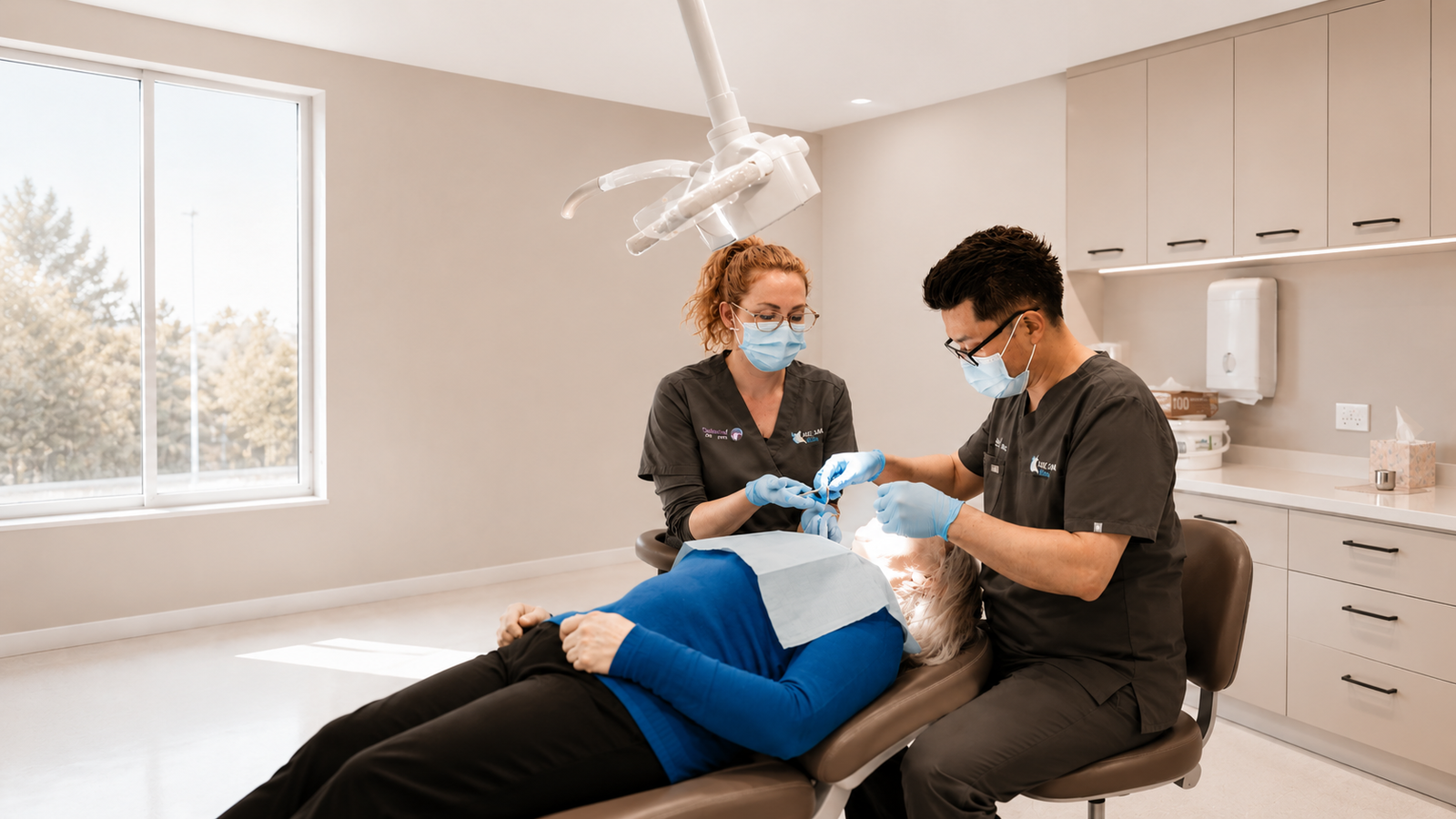
Implant-supported dentures
A removable denture secured by dental implants for improved stability and comfort.

Who an implant-supported denture may suit
Suitability is worked out through a full clinical assessment.
Implant-supported dentures may be suitable for people who find their dentures loose, uncomfortable, or difficult to wear confidently, or for those missing multiple teeth who want a removable option with greater stability than a conventional denture. They may be worth considering if you struggle with eating or speaking, prefer to remove your denture for cleaning, or want an alternative to a fixed implant solution. Suitability depends on factors such as jawbone volume, gum health, general health, lifestyle factors, and personal preferences, all of which will be assessed during your consultation.
How implant-supported dentures work
Implant-supported dentures use a small number of dental implants placed in the jawbone to help secure a removable denture, providing greater stability while still allowing it to be removed for cleaning. The number of implants required varies depending on factors such as available bone, the arch being treated, and the level of support needed. Dentures may attach directly to individual implants or clip onto a custom bar supported by multiple implants, with each option offering different considerations for stability, cleaning, and maintenance. Implant-supported dentures can also be used for some partial dentures where several teeth are missing. During your consultation, we’ll assess your circumstances, explain the available options, and discuss the potential benefits, limitations, and risks of treatment.
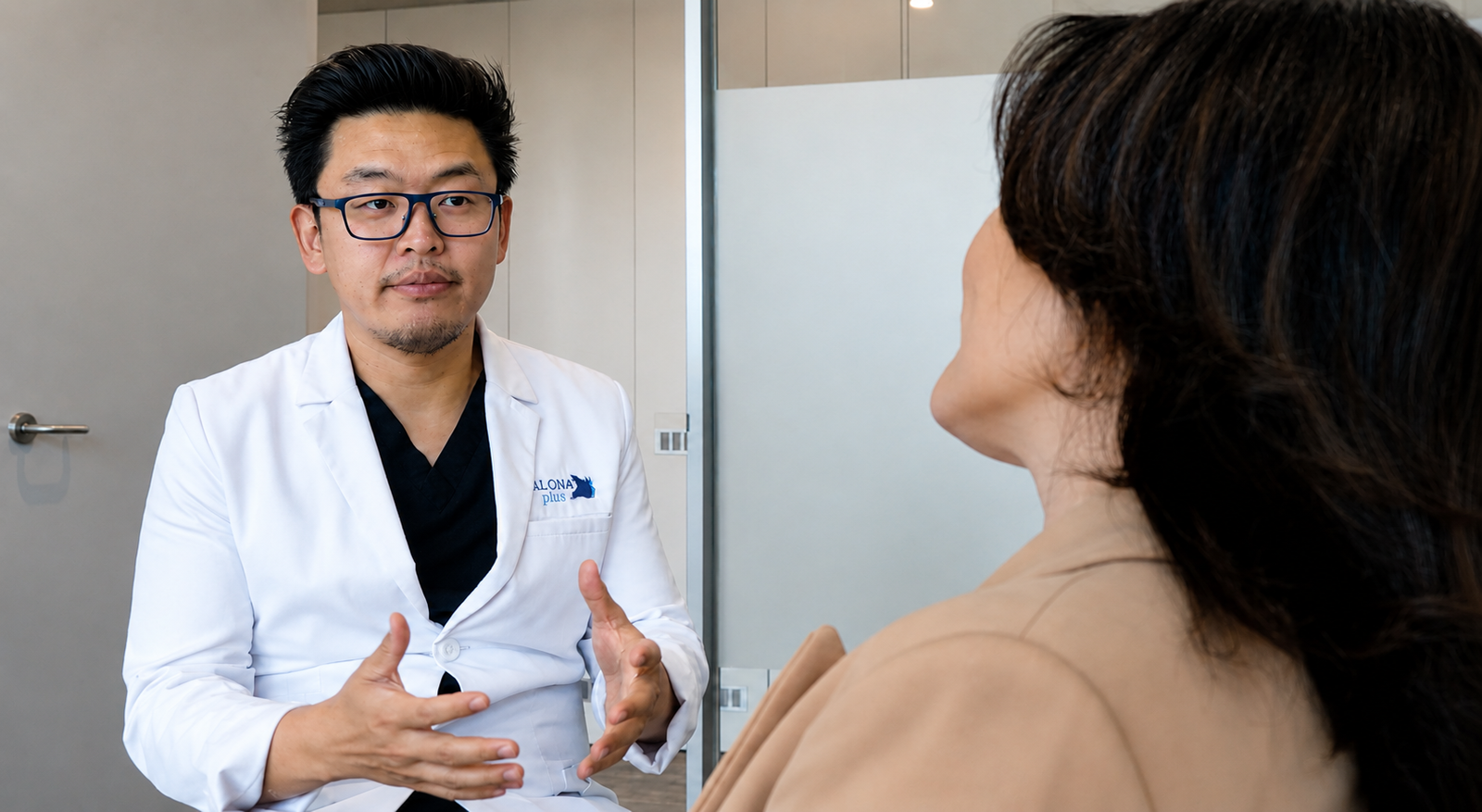
Implant-supported dentures
Treatment Process
Consultation
and planning
We start with a clinical examination, a review of your dental and medical history, and 3D scans of your jaw so we can see the bone and the structures around it. From there we plan where the implants will sit and how your new teeth will look and work, and we give you a written plan with a cost estimate and a timeframe.
Implant placement
and healing
The implants are placed into the jawbone, usually under local anaesthetic. A healing period then lets them bond with the bone, a process called osseointegration. You can usually keep wearing a denture during this time, and we may adjust it so it sits comfortably while the implants settle.
Fitting your
denture
Once the implants have healed, we fit the connectors and either make a new denture or adapt a suitable existing one to clip onto them. We check the fit, the bite and the hold, and fine-tune it until it feels right. Then we show you how to take the denture in and out, how to clean it and the implants, and we set up regular reviews.
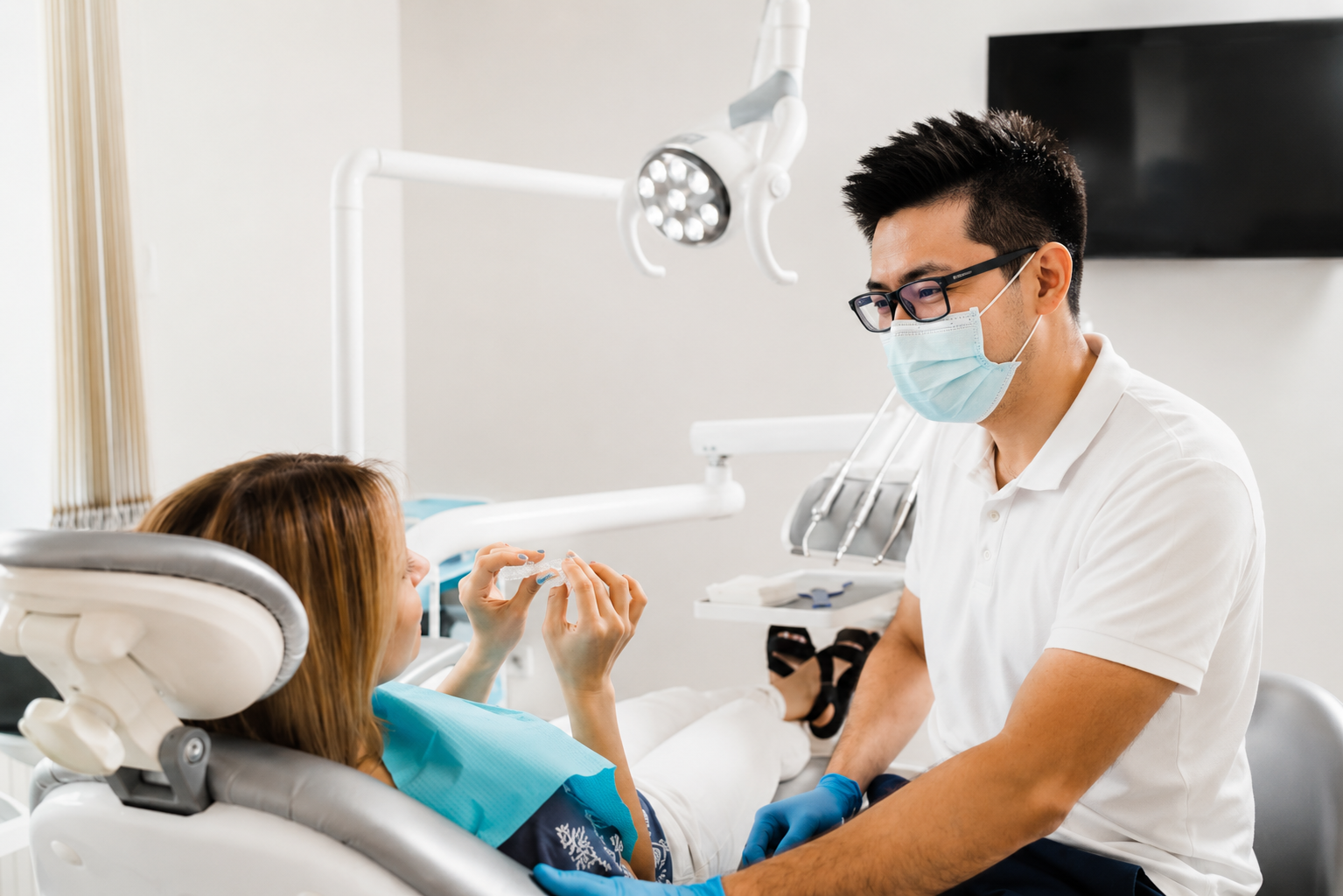
Potential benefits of implant-supported dentures
Benefits vary from person to person and are discussed at your consultation.
For suitable patients, an implant-supported denture can feel firmer and more stable than a conventional denture while still being removable for cleaning. Potential benefits may include improved stability when eating or speaking, less reliance on denture adhesives, easier cleaning for some patients, and support for the jawbone that may help slow bone changes after tooth loss. Because implant-supported dentures often require fewer implants than fixed implant bridges, they may be a more accessible option for some people, particularly where bone volume or budget is limited. For upper dentures, the design may also allow more of the palate to remain uncovered in some cases. During your consultation, we’ll explain the potential benefits, limitations, risks, and alternative options relevant to your circumstances so you can make an informed decision.
Looking after your denture
An implant-supported denture needs regular care for both the denture and the implants that support it. Daily cleaning helps prevent plaque build-up, while routine dental reviews allow us to check oral health, confirm the fit remains comfortable, and replace worn attachment components when needed as part of normal maintenance over time for a stable, hygienic result in the long term.
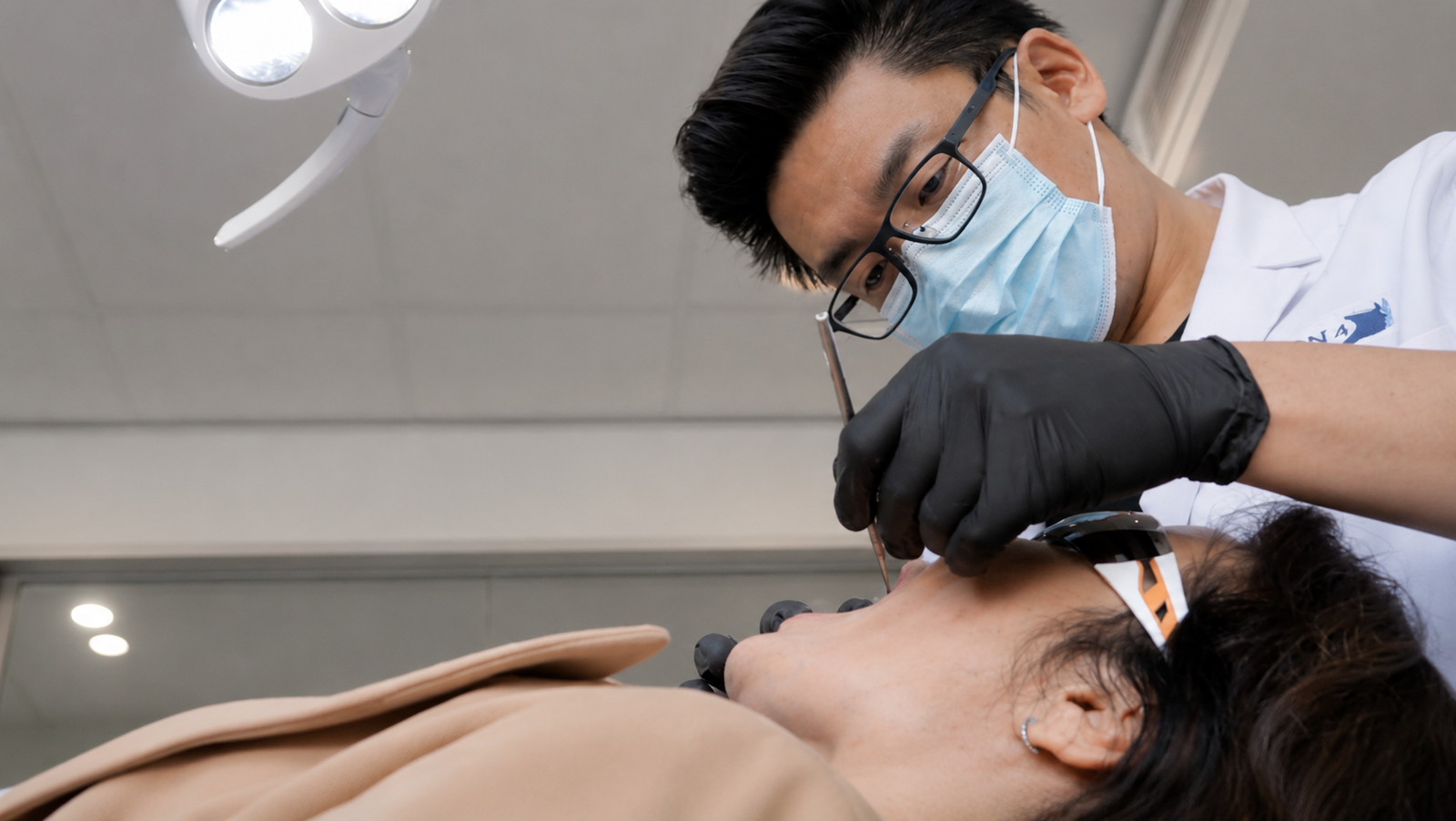
Before & after
Before-and-after images help illustrate typical treatment outcomes. Images shown are representative examples only. Individual results vary depending on oral health, treatment planning, and healing response. Images published with informed patient consent.


Treatment: All-On-4 Plus® implants
After photo taken approximately 3 weeks after procedure.


Treatment: All-On-4 Plus® implants
After photo taken approximately 3 weeks after procedure.


Treatment: All-On-4 Plus® implants
After photo taken approximately 3 weeks after procedure.

FAQs
Answers to some of the questions patients ask us about implant-supported dentures.
An implant-supported denture clips onto the implants and comes out for cleaning. A fixed bridge is screwed onto the implants and stays in, taken off only by your dental team. The removable option usually uses fewer implants and can be more achievable to begin with, while a fixed bridge tends to feel closer to natural teeth. We help you weigh up which suits you, and there is more on our full arch implants page.
It depends on the arch and your bone. A lower full denture often starts with two to three implants, while upper dentures or cases needing a firmer hold may use more. A partial implant denture depends on how many teeth are missing and where. We confirm the right number for you at your assessment.
Sometimes. If your existing denture is in good shape, it may be possible to adapt it to clip onto the implants. In other cases a new one is the better option. We assess this as part of your planning.
The implants hold it far more firmly than a conventional denture, so slipping is usually much less of an issue. A removable denture can still shift a little with very firm foods, which is part of the trade-off against a fixed option. We talk this through so you know what to expect.
The implants are usually placed under local anaesthetic. As with any dental treatment, experiences differ, and some tenderness, swelling or discomfort can happen while you heal. We explain what to expect beforehand and give you guidance on recovery and aftercare.
Like any surgical or dental procedure, implant treatment carries possible risks and complications. These can include infection, slower healing, an implant failing to bond, and gum or bone-related problems. The denture and its attachments also need ongoing maintenance, and parts wear over time. Smoking and diabetes can raise some of these risks. We discuss the benefits, the risks and the alternatives relevant to you before you go ahead.
The clip-in parts that grip the implants wear with everyday use, which is normal. How often they need replacing varies between patients and depends on the attachment type and how the denture is used. We check them at your regular reviews and replace them as part of routine maintenance.
Some private health policies with dental cover may pay towards part of the cost. Because benefits differ between insurers and levels of cover, we suggest contacting your health fund directly to confirm what your policy allows.
Contact us
If you’re considering dental implants or oral surgery and feel anxious about the process, we’re here to help. You can begin with a consultation to discuss your goals, oral health, and whether sedation dentistry may be suitable for you.
"*" indicates required fields